Thursday, March 4, 2021
THINGS I HAVE LEARNED ABOUT MYSELF AS A MASTER GARDENER Mary Jane Bosworth

Friday, February 26, 2021
ALL THE BUZZ by Bea Leach
Wednesday, September 23, 2020

Wednesday, September 9, 2020
FALL GARDENING CHECKLIST
Thursday, September 3, 2020
ALL THE BUZZ!
Belinda Leach
Summer is winding down at the Memorial Garden at the Vance County Regional Farmers Market. The plants and flowers have been doing what they do for our pollinator friends. But there are more warm temperatures ahead and our pollinators still have much work to do. Enter the amazing plant, Eutrochium dubium, a.k.a. Joe-Pye Weed. Joe has been hanging out in the garden all spring and summer with his handsome large, dark green leaves patiently awaiting his time on stage. In late summer, Joe starts producing his large, airy clusters of inflorescences that range from light pink to dark purple and provide important late season nectar to the bees and butterflies.
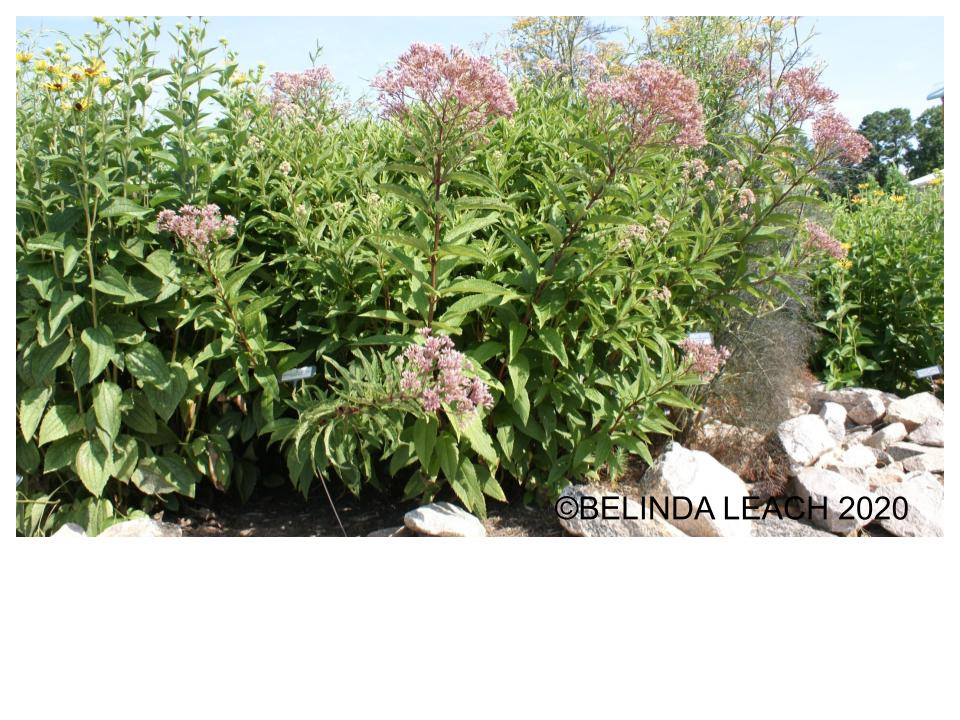
Joe-Pye Weed is a plant that is almost always happy where you plant him. He likes a variety of soils, enjoys wet feet, but can endure some drought conditions, and will take full sun or part sun. Deer do not bother him, nor do other insects or diseases.
Because Joe-Pye gets tall, six to eight feet in height, he is most suited for the back of a garden bed and needs plenty of room to spread out. He can be made less leggy and become stockier by cutting back the plant by half in early summer. Joe spreads through self-seeding and can be divided in the spring. As interesting as the plant, so too is the way it got its name. The legend is that a New England medicine man, Joe Pye, used the plant to cure typhus.
The Memorial Garden is home to three cultivars of Joe-Pye; Eutrochium dubium “Baby Joe” and “Little Joe” and Eutrochium maculatum “Phantom”. These plants will have another life this winter as the dried flower head will be left for the birds.
Another spectacular display in the late summer garden is Solidago rugosa 'Fireworks', Fireworks Goldenrod. This beauty looks like a huge display of bursting skyrockets with small, narrow, dark green leaves and tiny yellow or gold florets on long rigid stems.
Goldenrod is just now becoming used frequently in gardens. It has often been mistaken for ragweed which is hated by allergy sufferers. Unlike ragweed, its pollen is not windblown, but the pollen has to be moved from plant to plant by our wonderful pollinator friends who are looking for late season nectar. Goldenrod is easy to grow as it is a sun to part shade loving plant that will tolerate drought and poor soil, has few disease and insect problems and is deer resistant.
Salidago is wonderful as an accent in the back of a garden or border as it will get three to four feet tall. Since it blooms in late summer, it provides a beautiful backdrop for late summer bloomers such as purple and blue asters and fall blooming flowers like chrysanthemums. Goldenrod will stay blooming until frost and its droopy stems will provide interest to the garden in winter.

Adding Joe-Pye and Goldenrod will add a dazzling season finale to any garden.
Juel Duke
 The idea for this insect article literally landed on my hand. I’ve lived near water most of my life but I was not prepared for the enormous mosquito that landed and stayed long enough for me to study it a bit. Not a mosquito hawk or crane fly, but a mosquito I was sure. His big fuzzy antennae told me it was a male so I was relieved that I didn’t need to worry about him using his enormous proboscis. The internet provided many images of “giant mosquito” but the descriptions weren’t right. One hit that I happened to read in a bit more detail mentioned the Elephant Mosquito and it fit the bill right down to being very metallic and colorful. In fact, the rainbow sparkle was the second most memorable feature, after the size. The body of my visitor was easily a half inch long.
Thursday, March 5, 2020
Learn about critter friendly garden conservation practices.

Tuesday, September 17, 2019
By Paul McKenzie, Extension Agent
Join the Master Gardener℠ volunteers of Vance/Warren Counties on Saturday, October 5, 2019, for their Fall Gardening Symposium, which will be held in historic Warrenton, NC. This year the symposium will feature Brie Arthur, author of The Foodscape Revolution. Brie studied Landscape Design and Horticulture at Purdue University and since has worked as a grower, propagator, author, and correspondent on the Growing A Greener World show on PBS. She has a passion for sustainable, local food production and will share advice on how to practice this in your own backyard. The presentation by Brie Arthur will take place at 1 p.m. in the Warren County Courthouse, conveniently located in the heart of Warrenton. Registration is $20. Read more about this exciting event and find the link to register at http://go.ncsu.edu/foodscapewarren
Thursday, June 6, 2019
GARDEN DEDICATION, VANCE COUNTY, NC

Join the Extension Master Gardener volunteers for a drop-in celebration as we hold the official opening and dedication of the Memorial Garden at the Vance County Regional Farmers Market. We will have light refreshments and a short program, and we then invite you to stroll around the garden and visit with us. The garden is dedicated to the memory of members of our group who are no longer with us. It features drought tolerant plants that attract pollinators and other beneficial insects, and is also a Certified Wildlife Habitat.
http://go.ncsu.edu/vancegarden
Thursday, May 2, 2019
Interested in becoming an Extension Master Gardener Volunteer?

Monday, April 15, 2019
Fire Ants: A Good Question
The first question for the Question and Answer column comes from Linda Sigmon:
“Since Hurricane Florence, there seems to be a proliferation of fire ants. What is causing this?”
Yes, you are seeing more fire ant mounds since Hurricane Florence dumped so much water on our region. The short answer is that the ants have been there all along, living in an underground nest, even if there was no distinctive mound that showed their presence. With the abundant rainfall, the soil became looser and the ants were able to make their nests larger by mounding up the soil on top.

New colonies are started by winged males and females by leaving the nest and engaging in aerial mating. This allows the females to be widely dispersed from their parent colony. Each female is going to try to start a colony after her eggs are fertilized and, as described, the small colony is likely to go unnoticed for some time.
Monday, March 25, 2019
GETTING READY FOR HUMMERS & OTHERS from the May 2015 Garden Path Newsletter
It’s spring so now it’s time to plan for our summer feathered friends. One of my favorites is the hummingbird. In my yard they are especially fond of my hanging baskets and containers. Hanging baskets easily brighten any space and if they will attract birds then so much the better.
So here are a few suggestions.
1. FLOWERS – red is the color usually associated with hummers. This is a color that can be seen from a distance but mine also go to white, yellow and other pale colors. But select plants with tubular flowers. Also hummers seem to like floppy, open form plants that produce numerous flowers. I’ve
Tuesday, March 5, 2019
Spring 2019 Symposium coming soon.
Monday, March 4, 2019
Late Winter In The Tyro's Corner
Sizing Your Rain Garden
Spring Gardening Task List
- It's time to plant cool season vegetables, such as peas, broccoli, cabbage, lettuce, spinach and root crops.
- Vegetables and flowers that you want to plant outdoors next month may be started from seed indoors at this time. These include tomatoes, eggplant and peppers as well as zinnias and cosmos.
- Before woody plants break dormancy, prune and apply dormant oil if needed.
- Prepare beds where vegetables will be grown when the soil is dry enough to crumble.
- Apply pre-emergent herbicides by the time dogwoods are in bloom.
- Deadhead spring flowering bulbs but leave the foliage until it is dry.
- After early flowering shrubs such as forsythia have blossomed, cut 1/3 of the oldest canes to the ground.